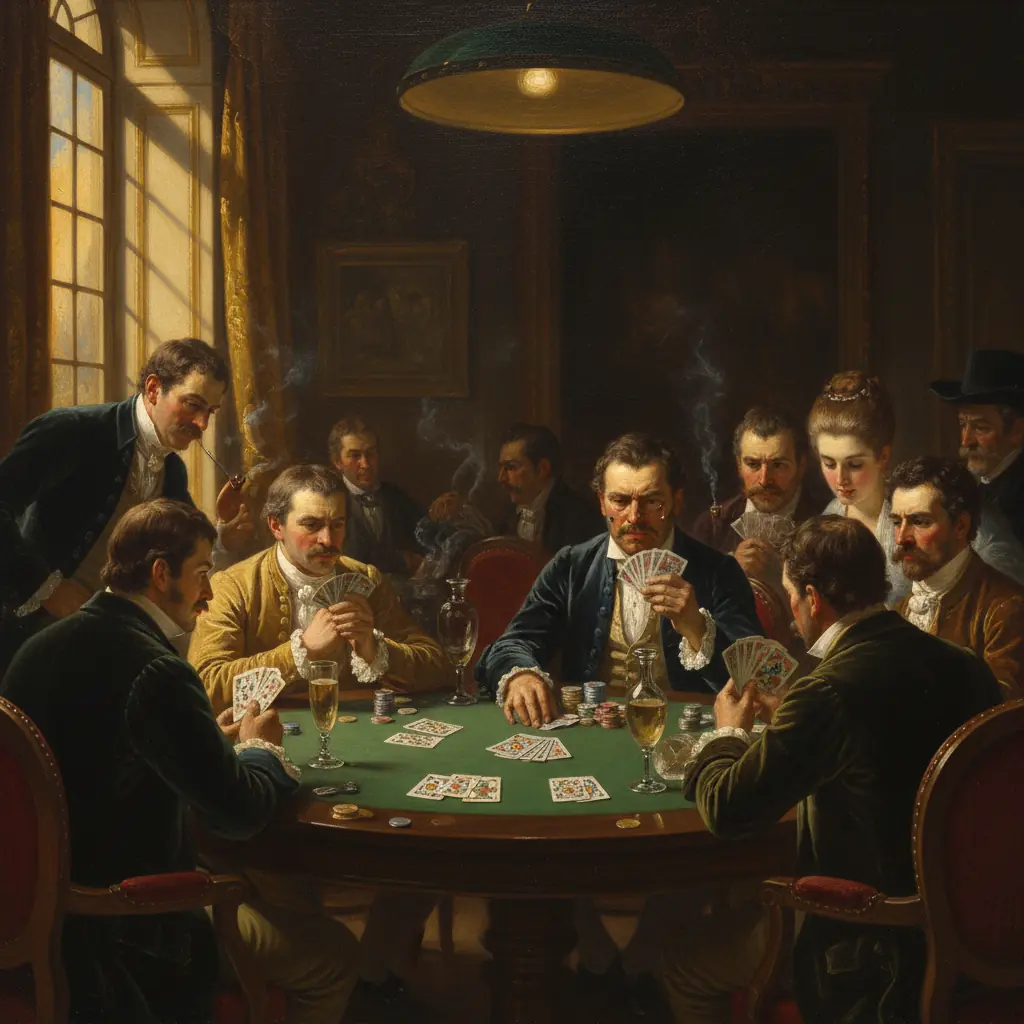
From Royal Courts to Casino Tables
Chemin de Fer, a card game steeped in history, boasts origins tracing back to 19th-century France. Unlike some games with murky beginnings, Chemin de Fer emerged into the spotlight, rapidly becoming a favorite within aristocratic circles. Its allure lay not only in the gameplay but also in its association with elegance and high society. Imagine smoky parlors filled with the murmur of French, the clinking of glasses, and the intense focus of players vying for victory – this was the world where Chemin de Fer thrived.
The game’s popularity quickly extended beyond private gatherings, finding a home in the burgeoning casinos of the era. These gambling houses provided a grand stage for Chemin de Fer, attracting players from all walks of life, all eager to test their luck and skill. The game’s inherent drama and potential for high stakes elevated its status, solidifying its place as a casino staple. It is considered by many a version of Baccarat even though it has considerable differences.
Chemin de Fer’s cultural impact extends beyond the gambling table. It has appeared in literature and film, most famously in the James Bond series, where its presence adds an air of sophistication and intrigue. These depictions have further cemented the game’s image as a pastime for the elite, adding to its mystique and appeal. The version played back then varies a lot from the one you can find in modern casinos, with rule changes and different formats.
From its exclusive beginnings in royal courts, Chemin de Fer successfully transitioned to the more accessible world of casinos, retaining its aura of sophistication and excitement. The game, although not as widespread as other casino offerings, continues to be enjoyed by those who appreciate its rich history and unique gameplay. It represents a tangible link to a bygone era of elegance and high-stakes gambling.
Chemin de Fer vs. Modern Baccarat: Key Differences
While sharing the same core objective – wagering on whose hand, the Player’s or the Banker’s, will be closest to nine – Chemin de Fer diverges significantly from modern Baccarat variants like Punto Banco and Mini-Baccarat. These differences lie primarily in the Banker’s role, the freedom players have in making decisions, and, consequentially, the overall social and strategic dynamics of the game. Let’s explore these key distinctions.
The Banker’s Authority: A Player-Driven Game
In Chemin de Fer, the role of the Banker rotates among the players, adding a layer of player interaction absent in other versions. The Banker’s responsibilities are significant; they decide the stake for each round, collect losing bets, and pay out winnings. This isn’t merely a ceremonial position. The Banker effectively plays against the other players, creating a dynamic where strategy and nerve are just as important as luck. Each round, or ‘coup,’ sees the Banker facing off against the remaining players, accepting or refusing the bets.
Understanding the ‘Old School’ Banker Role
In the classic game of Chemin de Fer, the Banker role is more than just dealing cards; it’s a position of strategic importance, significant responsibility, and inherent power. The Banker controls the flow of the game and has the potential to significantly influence the outcome. This comes with considerable pressure, as their decisions directly impact not only their own stake but also the fortunes of the other players.
Setting the Stakes: Risk and Reward for the Banker
The Banker begins by setting the initial stake, a crucial decision that demands careful consideration. A high stake offers the potential for a substantial reward, but also exposes the Banker to greater risk. Conversely, a lower stake reduces the risk but limits the potential payout. The Banker must assess the table, consider the other players’ betting styles, and weigh their own risk tolerance to determine the optimal stake.
Navigating the Third Card Decision as Banker
One of the most critical decisions the Banker faces is whether or not to draw a third card. This decision is governed by a specific set of rules, but within those rules lies room for strategic maneuvering. The Banker must analyze the current hand, anticipate the potential outcomes of drawing a third card, and calculate the odds of improving their hand versus the risk of worsening it. Successfully navigating this decision is often the key to success as the Banker.

Punter’s Playbook: Classic Strategies and Tactics
In the thrilling game of Chemin de Fer, the punter isn’t just placing bets; they’re engaging in a strategic dance with chance and psychology. A cornerstone of any successful punter’s approach is mastering betting strategies. One common tactic is to follow trends – observing whether Player or Banker wins are on a streak and aligning bets accordingly. However, a savvy punter also knows when to deviate, disrupting predictable patterns to capitalize on changing momentum. Varying bet sizes is another crucial element. A confident player might increase their wager after a win, pressing their advantage, while reducing it after a loss to conserve capital and reassess the situation. Understanding the ebb and flow of the game, and adjusting bets accordingly, is paramount.
The psychology of betting is equally important. A punter needs to cultivate a calm and disciplined mindset, resisting the urge to chase losses or become overly confident after a series of wins. Knowing when to bet high requires a blend of intuition and calculated risk assessment. A strong hand, combined with favorable table dynamics, might warrant a larger bet. Conversely, when the odds seem less certain, or the table is dominated by other strong players, a more conservative approach is wise. Ultimately, success in Chemin de Fer as a punter hinges on a combination of strategic betting, psychological fortitude, and a keen understanding of the game’s inherent unpredictability.
Bet Sizing and Table Awareness
Bet sizing is not merely about placing a monetary value; it’s a calculated maneuver. A punter should vary their bets, not randomly, but strategically. When the momentum shifts in their favor, increasing the bet can maximize potential gains. But table awareness is key. Observe other players: are they aggressive or cautious? Adapt your bet size accordingly. A table full of high rollers might necessitate larger bets to stay competitive, while a more conservative table offers opportunities to win smaller pots more consistently.
The Art of Observation: Exploiting Tells and Tendencies
Beyond the cards, Chemin de Fer is a game of human interaction. Observing other players can reveal subtle tells – unconscious behaviors that betray their confidence (or lack thereof). A shaky hand might indicate a bluff, while prolonged eye contact could signal a strong hand. Similarly, identify tendencies. Does a particular player consistently bet big on Banker? Does another always fold when facing a high wager? Exploiting these patterns, gleaned from careful observation, can provide a crucial edge, allowing the punter to make more informed decisions and ultimately increase their chances of success.
Reading the Table: Player Psychology and Social Dynamics
Success in Chemin de Fer extends beyond understanding the rules; it requires keen observation and astute interpretation of player psychology. By carefully watching opponents, one can decipher subtle tells – unconscious behaviors that betray their hand’s strength or weakness. These tells might manifest as nervous fidgeting, hesitation before betting, or a change in breathing patterns. Recognizing these cues provides a significant informational edge. Moreover, successful players grasp the nuances of social dynamics at the table. Is there an alliance forming between certain players? Is someone trying to intimidate others with large bets? Understanding these relationships is crucial for navigating the game strategically.
Building a Table Image and Using Deception
Crafting a specific “table image” is a powerful strategic tool in Chemin de Fer. By intentionally projecting a certain persona – whether it’s a cautious conservative player or a reckless high-roller – one can influence opponents’ decisions. This carefully cultivated image becomes a form of deception. A player might feign weakness to lure others into betting big, only to reveal a strong hand. Conversely, they might bluff with aggressive bets, even with a weak hand, to scare opponents into folding. Mastering the art of deception, combined with sharp observation, elevates a player’s game to a new level, turning the tables on unsuspecting opponents.

Risk Management and Bankroll Strategy
Playing Chemin de Fer requires a sharp focus on risk management and a well-defined bankroll strategy. Unlike some casino games with fixed odds, Chemin de Fer’s player-versus-player dynamic introduces potentially higher volatility. Setting betting limits is crucial. Determine the maximum amount you’re willing to wager per round, and stick to it. This prevents chasing losses and safeguards your bankroll during unfavorable streaks.
Effective money management is also key. Divide your total bankroll into smaller units, representing the amount you’re comfortable losing in a single session. A conservative approach is generally recommended, given the game’s inherent risks. Be mindful of the potential for significant swings in fortune, and adjust your betting strategy accordingly. Disciplined bankroll management will allow you to enjoy the game responsibly and extend your playing time.
Finding ‘Old School’ Chemin de Fer Today
The thrilling echoes of Chemin de Fer, once a casino mainstay, now whisper faintly in the modern gaming world. Finding a traditional game today requires a dedicated search, often leading players to Europe’s established casinos. While not as prevalent as in its heyday, Chemin de Fer can still be found in certain high-limit rooms, particularly in casinos with a rich history of catering to sophisticated players.
If a physical quest proves fruitless, online casinos offer an alternative. Though not branded as “Chemin de Fer,” some online platforms feature games with similar rules and low house edge, mimicking the strategic depth of the original. Exploring live dealer casino game variations may also uncover games that give a taste the strategic betting and player-versus-player dynamics that made Chemin de Fer so alluring. The search requires tenacity and a keen eye for detail, but the reward is a chance to experience casino gaming in its most classic form.
Conclusion
In conclusion, ‘old school’ Chemin de Fer presents a fascinating blend of chance, skill, and social interaction, distinguishing it from many modern casino offerings. Its historical roots and the emphasis on player agency create a unique and engaging experience. The subtle strategies, from card counting to reading opponents, add layers of complexity that reward careful observation and calculated risk.
While perhaps not as widely available as other forms of Baccarat, the enduring appeal of Chemin de Fer lies in its charm, its strategic depth, and the sense of connection it fosters between players. For those seeking a casino game with a touch of history and a significant element of player involvement, ‘old school’ Chemin de Fer remains a compelling and rewarding choice. Whether you’re a seasoned gambler or a curious newcomer, exploring the intricacies of this classic game is an invitation to appreciate a rich tradition of strategic card play.