
The roar of the crowd, the crack of the bat, and the electric atmosphere – these are the hallmarks of T20 cricket, and nowhere are they more vibrant than in the Vitality Blast. This English cricket tournament isn’t just a sporting event; it’s a cultural phenomenon, a breeding ground for future stars, and a summer staple for cricket fans across the nation.
Having followed the league with passion for years, witnessing nail-biting finishes and unforgettable performances, it’s clear the Vitality Blast holds a special place in the hearts of cricket enthusiasts. The league ignites a unique blend of local pride and world-class talent. From seasoned county champions to emerging international players, the Vitality Blast showcases the very best of the sport.
With the exciting prospect of changes coming in 2026, now is the perfect time to dive deep into the heart of the tournament. This guide is your all-access pass to understanding the Vitality Blast, providing expert insights, tactical analysis, and everything you need to fully appreciate the thrill of English T20 cricket.
What is the Vitality Blast?
The Vitality Blast is a thrilling Twenty20 (T20) cricket competition held annually in England and Wales. It is a high-octane tournament, a showcase of big hits, athletic fielding, and strategic bowling. More than just a sporting event, the Vitality Blast has become a staple of the English summer, providing both entertainment and a platform for rising cricket stars.
Its roots are in the Twenty20 Cup, a tournament launched by the England and Wales Cricket Board (ECB) to revitalize domestic cricket. Over the years, it has undergone several name changes, including Friends Life t20 and NatWest t20 Blast, before becoming the Vitality Blast. Each iteration has built upon the excitement and popularity of the format, solidifying its place in the hearts of cricket fans.
The ECB has played a crucial role in shaping the Vitality Blast into what it is today. From its inception, the board recognized the potential of the T20 format to attract new audiences and boost participation in the sport. The Vitality Blast has profoundly impacted domestic cricket, offering a fast-paced, accessible alternative to traditional formats. Its influence extends to the international stage, with many innovations and strategies first tested in the Blast finding their way into international T20 cricket. Today, the Vitality Blast stands as a testament to the enduring appeal of cricket and the power of innovation in sport.
Origins of the T20 Blast
The T20 Blast emerged from a desire to inject fresh energy into English domestic cricket. When the Benson & Hedges Cup ended, the ECB needed a one-day competition to fill the void and attract a younger demographic. Stuart Robertson, the marketing manager of the ECB, championed the T20 format as the ideal solution. Legend says he was a maverick, pushing the boundaries of what cricket could be. Robertson envisioned a short, action-packed game that could be enjoyed by both seasoned cricket enthusiasts and newcomers alike. His vision ultimately led to the birth of the Twenty20 Cup, the precursor to the Vitality Blast.
Understanding the Format of the Vitality Blast
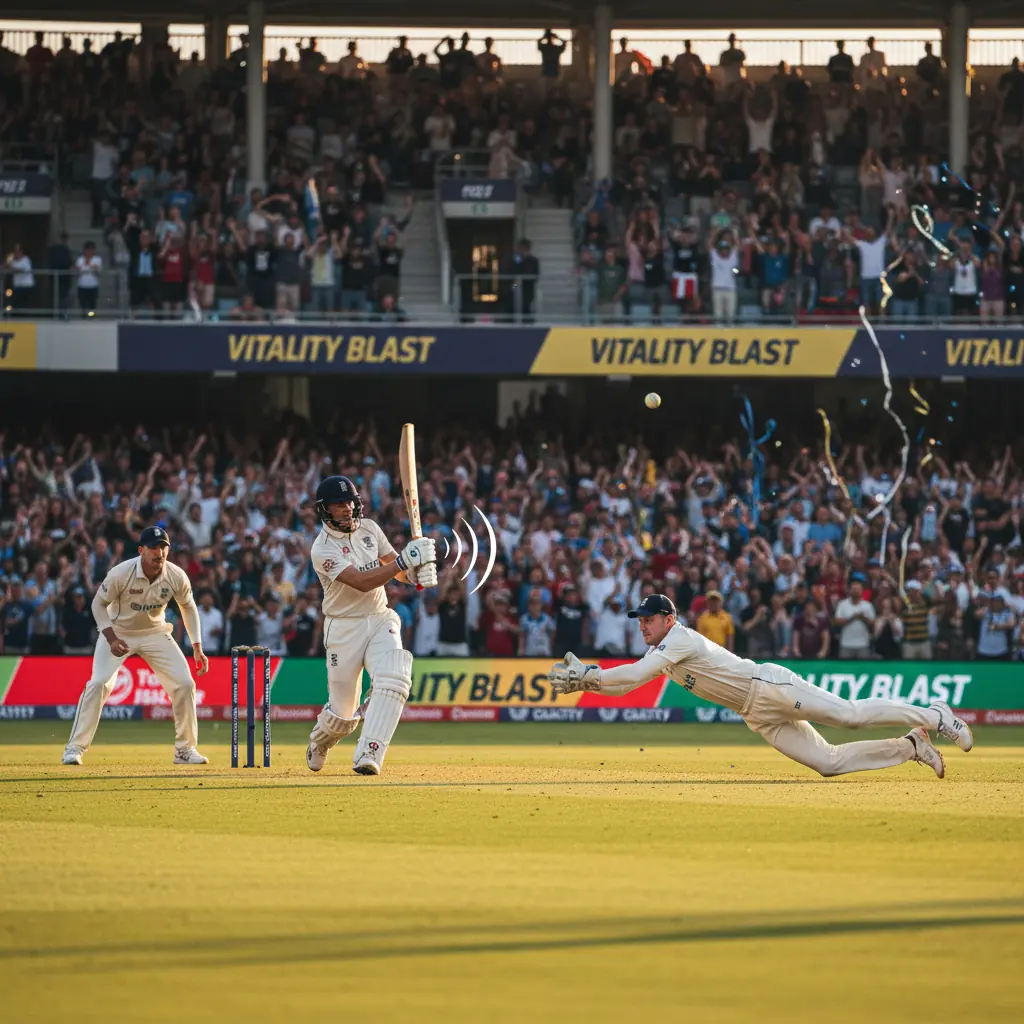
The Vitality Blast, a thrilling showcase of high-octane T20 cricket, follows a format designed to maximize excitement and competitive intensity. The tournament begins with a group stage, a battleground where teams vie for a coveted spot in the knockout rounds. Previously split into two geographical divisions, the tournament is restructured into three groups: North Group, Central Group, and South Group. Each group comprises several teams that will battle it out in a series of matches.
Each team will play a series of matches within their group. Each win earns a team two points, while a tie results to one point for each team, and a loss yields nothing. The teams are then ranked according to their total points. At the end of the group stage, the top teams from each group automatically advance to the quarter-finals. The teams with the best overall records, regardless of their group, make up the remaining spots in the quarter-finals
The quarter-finals mark the beginning of the knockout stage. The teams that qualified go head-to-head in a sudden-death match. The winners advance to the Finals Day. Finals Day is a cricket extravaganza, a single day featuring both semi-finals and the final. The two semi-final matches are played consecutively, and the winners battle it out in the final to claim the Vitality Blast title. This day is jam-packed with action, ensuring non-stop entertainment and a champion crowned in a single day.
Qualification for the knockout stages isn’t always straightforward. Net Run Rate (NRR) often plays a crucial role, especially when teams are tied on points. NRR is calculated by subtracting the average runs conceded per over from the average runs scored per over. A higher NRR can be the deciding factor in who proceeds to the next stage. Furthermore, cricket matches can be unpredictable. Rain can interrupt play, leading to adjusted targets or even abandoned matches. In such cases, Duckworth-Lewis-Stern (DLS) method, a statistical algorithm that adjusts targets in rain-affected limited overs matches, comes into play to determine a fair result. If a match is completely washed out, both teams share a point.
Key Rule Changes for 2026
The 2026 season, promises to inject the Vitality Blast with even more thrills, due to some key rules changes. It’s difficult to pinpoint specific rule alterations without confirmed information, however, expect adaptations designed to encourage faster scoring rates and more aggressive play. These could involve adjustments to powerplay overs, restrictions on field placements, or even innovative scoring systems. The reasoning for these changes is simple: to make the game more captivating. The potential outcomes of these changes are varied. Expect more high-scoring encounters, potentially favoring teams with explosive batting line-ups. Teams may need to rethink their strategies, placing greater emphasis on aggressive batting and innovative bowling tactics.
Key Teams and Players to Watch in 2026
As the excitement builds for the upcoming 2026 season, fans and analysts alike are eager to identify the teams most likely to compete for the championship. Predicting a champion is never easy. Many factors play a role from team chemistry to injuries. However, some teams consistently demonstrate the talent and drive necessary for a deep run. Let’s dive into some of the potential contenders and standout players who could define the narrative of the season. Previous winners have shown that a combination of strategic gameplay, a strong team dynamic, and exceptional individual performances are crucial for success.
Players that are Expected to Make an Impact
Several players are poised to leave a significant impression on the 2026 season. Among the batsmen, keep an eye on individuals known for their aggressive approach and ability to score quick runs, potentially changing the course of a match in a few overs. On the bowling front, look the bowlers who have mastered the art of deception and variation. Their spells have the potential to cripple opposing batting lineups and secure crucial victories for their teams and they expected to showcase their skills and make a significant contribution to their respective teams’ success. It will be interesting to see how these perform.
Contenders
Identifying clear frontrunners this far out is a challenge, but several teams across the north, central, and south groups have the potential to rise to the top. Teams with a blend of experienced veterans and promising young talent often prove to be formidable contenders. These teams typically boast a well-rounded squad with depth in both batting and bowling departments. They also usually have strong leadership that can navigate the pressures of a long and demanding season. The key to victory often lies in consistency and the ability to perform under pressure, making these teams ones to watch closely as the season unfolds.

Strategies and Tactics in the Vitality Blast
The Powerplay Dynamic
The initial six overs, known as the Powerplay, are a goldmine for aggressive batting. Teams often front-load their innings with their most explosive hitters, aiming to maximize the field restrictions. This is when you’ll see batsmen attempting high-risk, high-reward shots, trying to clear the infield and capitalize on the fewer fielders allowed outside the inner circle. It’s a calculated gamble – go big or go home – and those who succeed can set the tone for a massive score. The Powerplay isn’t just about brute force; it’s a tactical dance. Openers need to assess the pitch and the bowlers quickly, identifying scoring opportunities while minimizing risks. A well-executed Powerplay can quickly demoralize the opposition and shift the momentum firmly in the batting side’s favor.
Beyond the Powerplay, successful Vitality Blast teams employ a range of batting strategies. Some prefer a measured approach, building a solid foundation before unleashing their power hitters later in the innings. Others adopt a more aggressive mindset throughout, constantly looking for boundaries and rotating the strike to keep the scoreboard ticking. In the death overs – the final few overs of the innings – calculated risk-taking is crucial. Batsmen need to be innovative, using ramps, scoops, and switch-hits to disrupt the bowlers’ rhythm and find unconventional scoring areas. What I have seen in the field is that success often hinges on adaptability. A rigid game plan is useless if the conditions or the opposition don’t cooperate.
Bowling tactics in the Vitality Blast are just as crucial. Varying pace and utilizing spin bowling are key to keeping the batsmen guessing. Spinners can be particularly effective in the middle overs, stifling the scoring rate and picking up crucial wickets. Death bowling is an art form in itself. Bowlers need to be able to execute yorkers, slower balls, and bouncers with pinpoint accuracy, even under immense pressure. I have seen that Captaincy plays a massive role, too. A captain with a sharp cricketing brain can make all the difference, making shrewd bowling changes, setting innovative fields, and keeping the team focused and motivated. Good fielding is not only about preventing runs. It’s about creating pressure and converting opportunities with sharp catches and direct hits. Ultimately, success in the Vitality Blast comes down to a combination of skill, strategy, and a bit of luck.
The Vitality Blast and the Future of English Cricket
The Blast as a Breeding Ground
The Vitality Blast stands as a crucial breeding ground for English cricket’s future stars. Its high-intensity environment and exposure to large crowds provide invaluable experience for emerging players. The tournament serves as a proving ground, allowing young talents to showcase their abilities against seasoned professionals. Success in the Blast often acts as a springboard, propelling players into county cricket and, ultimately, contention for national team selection. This dynamic competition helps to identify and nurture the next generation of cricketers. Securing their place on the grand stage and shaping the future of English cricket.
The Vitality Blast’s impact extends far beyond individual success stories. The league has fostered innovation in tactics and playing styles, with teams constantly seeking new ways to gain an edge. These trends often trickle up to the national team, influencing England’s approach to limited-overs cricket. The tournament’s emphasis on aggressive batting and inventive bowling has contributed to a more dynamic and exciting brand of cricket, captivating fans and attracting new audiences to the sport.
However, the Vitality Blast isn’t without its challenges. Schedule congestion remains a persistent issue, with players often facing a grueling workload. The rise of franchise leagues around the world also poses a threat, potentially luring away top talent with lucrative contracts. Despite these challenges, the Vitality Blast remains a vital component of the English cricket ecosystem. It is playing a crucial role in talent development and also in shaping the future of the sport. Its ability to adapt and innovate will be key to its long-term success.
Conclusion
In summary, the Vitality Blast tournament delivered a potent mix of explosive performances, nail-biting finishes, and unexpected upsets. Several teams showcased remarkable talent, while others faced challenges, making for a compelling narrative throughout the competition. The key takeaways include the emergence of new stars, the strategic shifts in batting and bowling approaches, and the unwavering support from fans who created an electric atmosphere at every match.
Looking ahead, the future outlook for the Vitality Blast is bright. The tournament has proven its ability to attract top-tier players and captivate audiences, solidifying its position as a premier T20 competition. As we anticipate the upcoming season, keep an eye on the evolving team dynamics, potential rule changes, and the continued innovation in player strategies. The Vitality Blast promises to deliver even more excitement and drama. Do not miss it.
As a final thought, the Vitality Blast no